
TroublePad Dual: A high-speed camera system with synchronised dual view
Dual high-speed camera for a complete analysis of your production lines
TroublePad Dual is an high-speed camera solution equipped with 2 synchronised cameras to simultaneously analyse your production line or high-speed machinery from several angles. Some anomalies only come to light when several viewpoints are cross-referenced: TroublePad Dual gives you this unique overall view.
Based on the tried-and-tested TroublePad Classic platform, TroublePad Dual records both video streams at high speed and plays them back in synchronised slow motion on a 14-inch IP65 MIL-STD-810H rugged tablet. One operator, two cameras, zero blind spots.
TroublePad Dual is aimed at industrial maintenance teams, quality managers and process engineers in the food, packaging, cosmetics, automotive and pharmaceutical industries.
About TroublePad Dual High-Speed Camera – Dual High-Speed Camera System for Production Lines
TroublePad Dual: never miss a thing when analysing your processes

What is TroublePad Dual made up of?
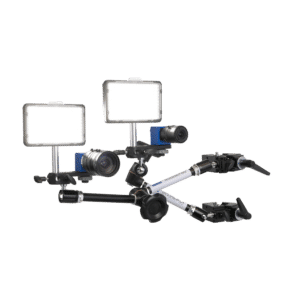
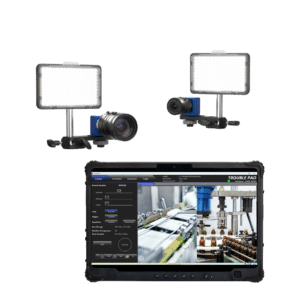
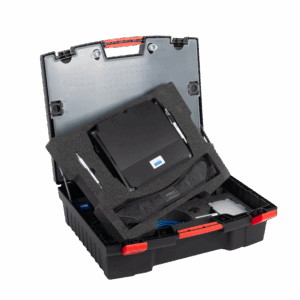
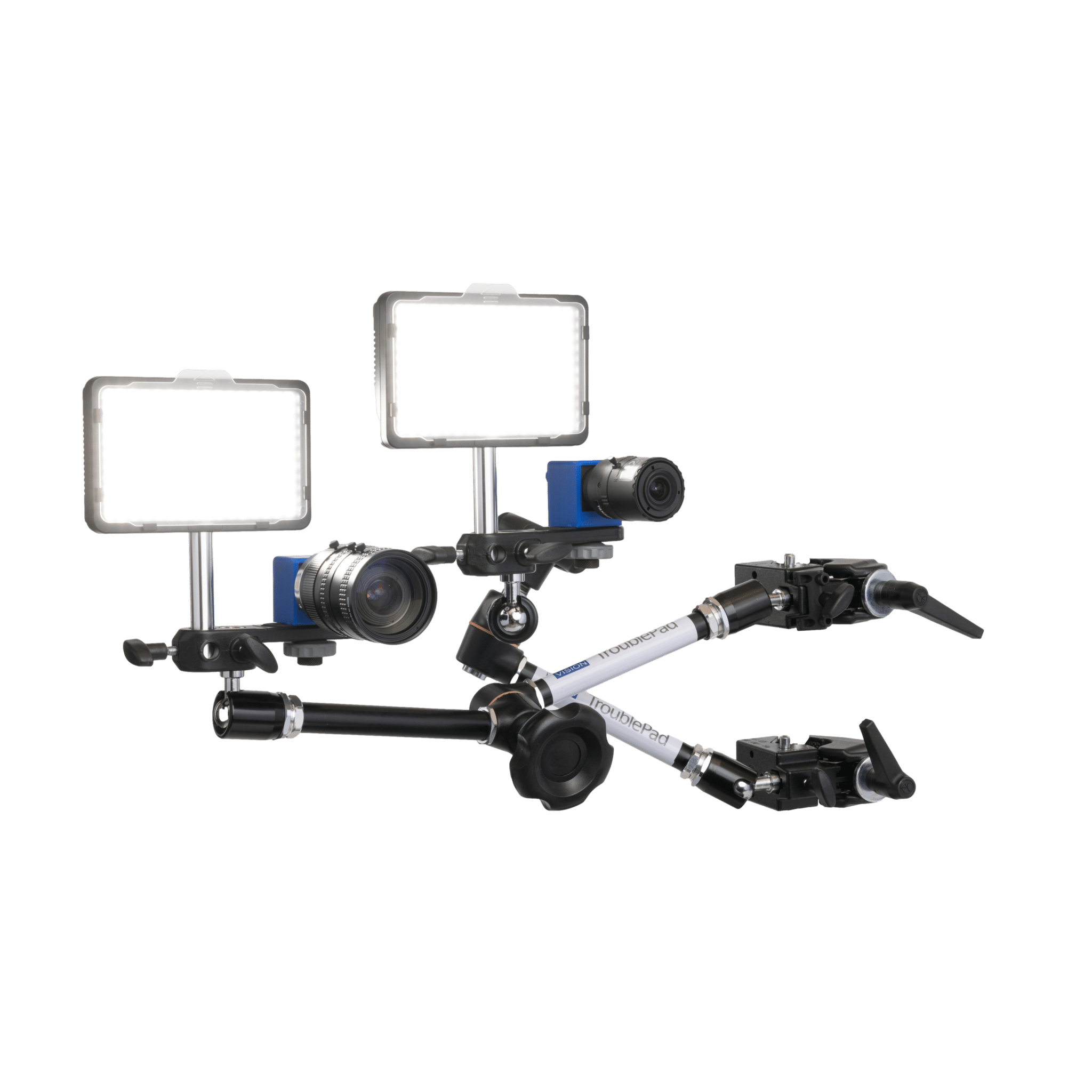
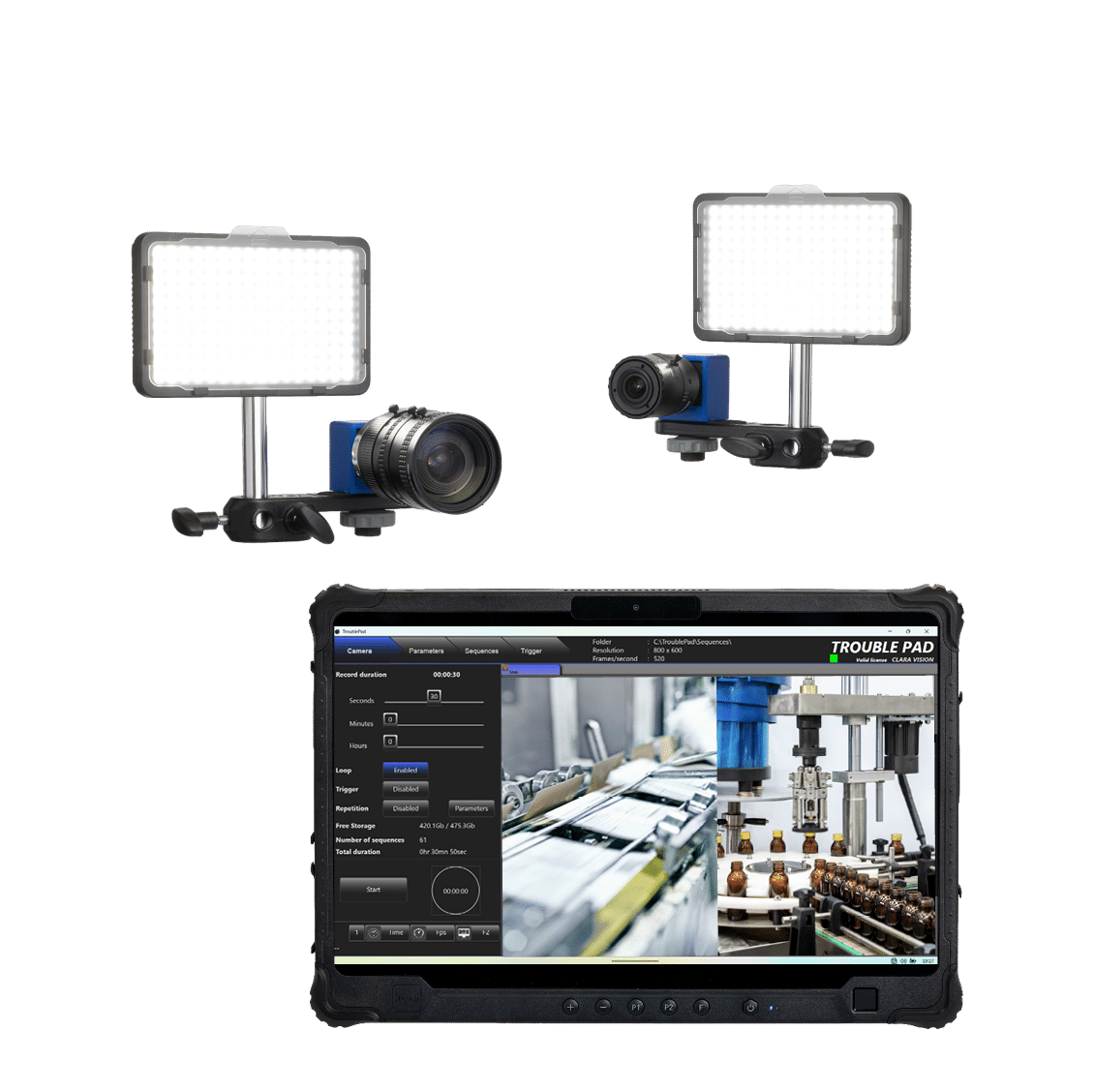
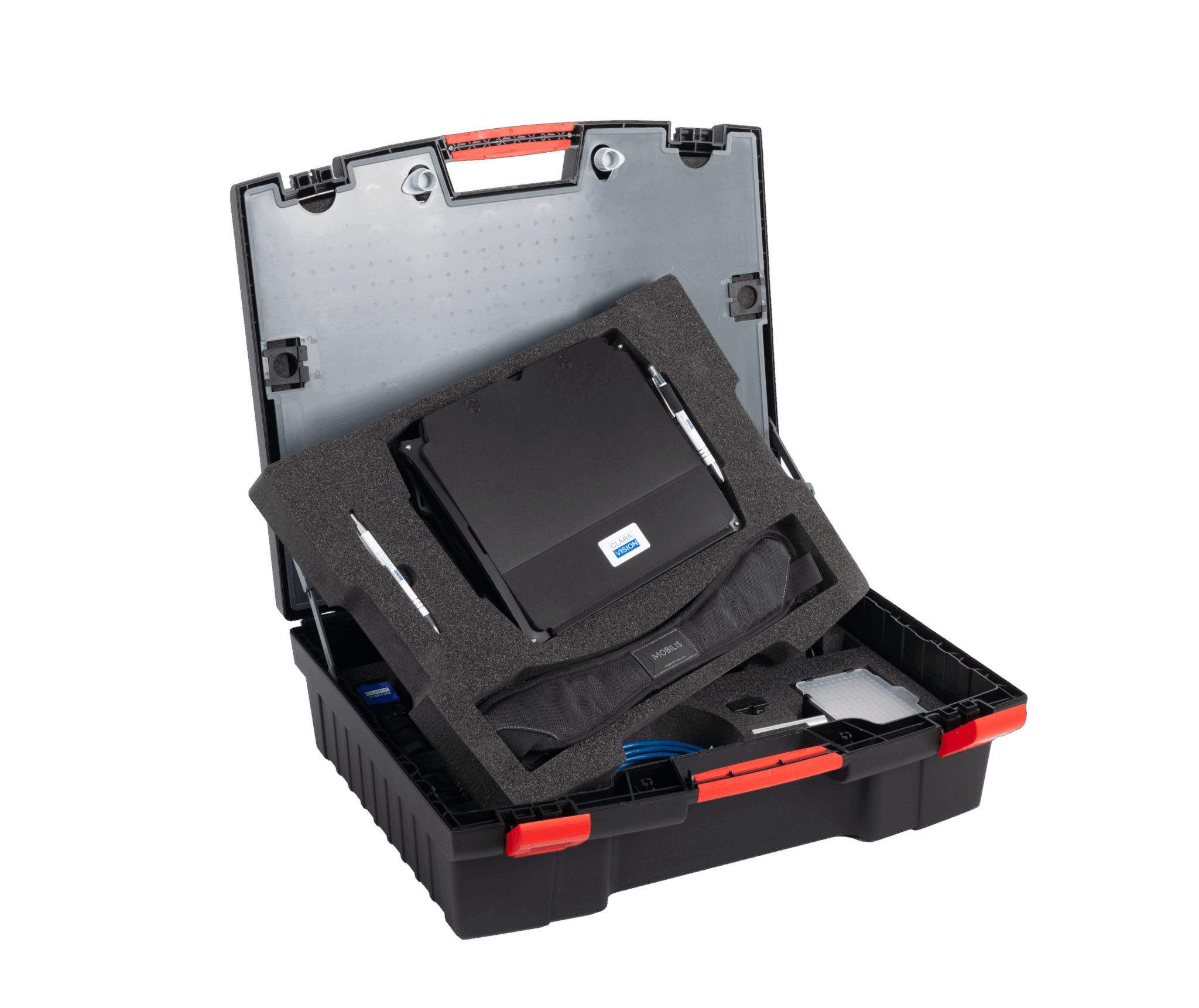
The TroublePad Dual system comes in two carrying cases with pre-formed foam, containing all the equipment needed for immediate on-site use:- 2 HD 1280×1024 colour high-speed cameras: simultaneous high-speed recording
- 1 rugged 14'' IP65 MIL-STD-810H tablet: i7 processor, 32 GB RAM, 1 TB SSD
- 2 manual 8-48 mm F1.0 zoom lenses with set of macro close-up lenses (1D, 2D, 4D, 10D)
- 2 LED lighting units with 176 LEDs (~1300 lux at 50 cm) - mains or battery powered (optional)
- 2 magic arms with variable friction for fast, precise positioning
- TroublePad software shared across the whole range - intuitive, easy-to-use interface
- 2 USB 3.0 cables (3 metres) connecting the cameras to the tablet
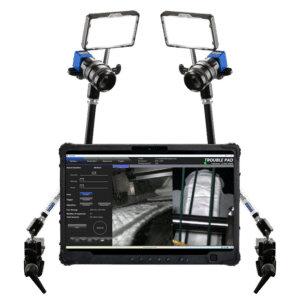
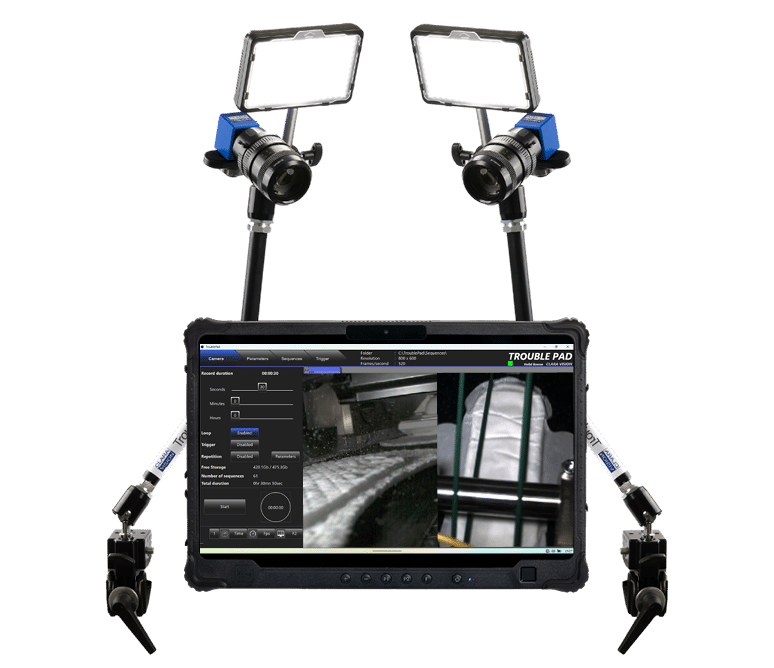
Synchronised playback: a new way of looking at your production problems
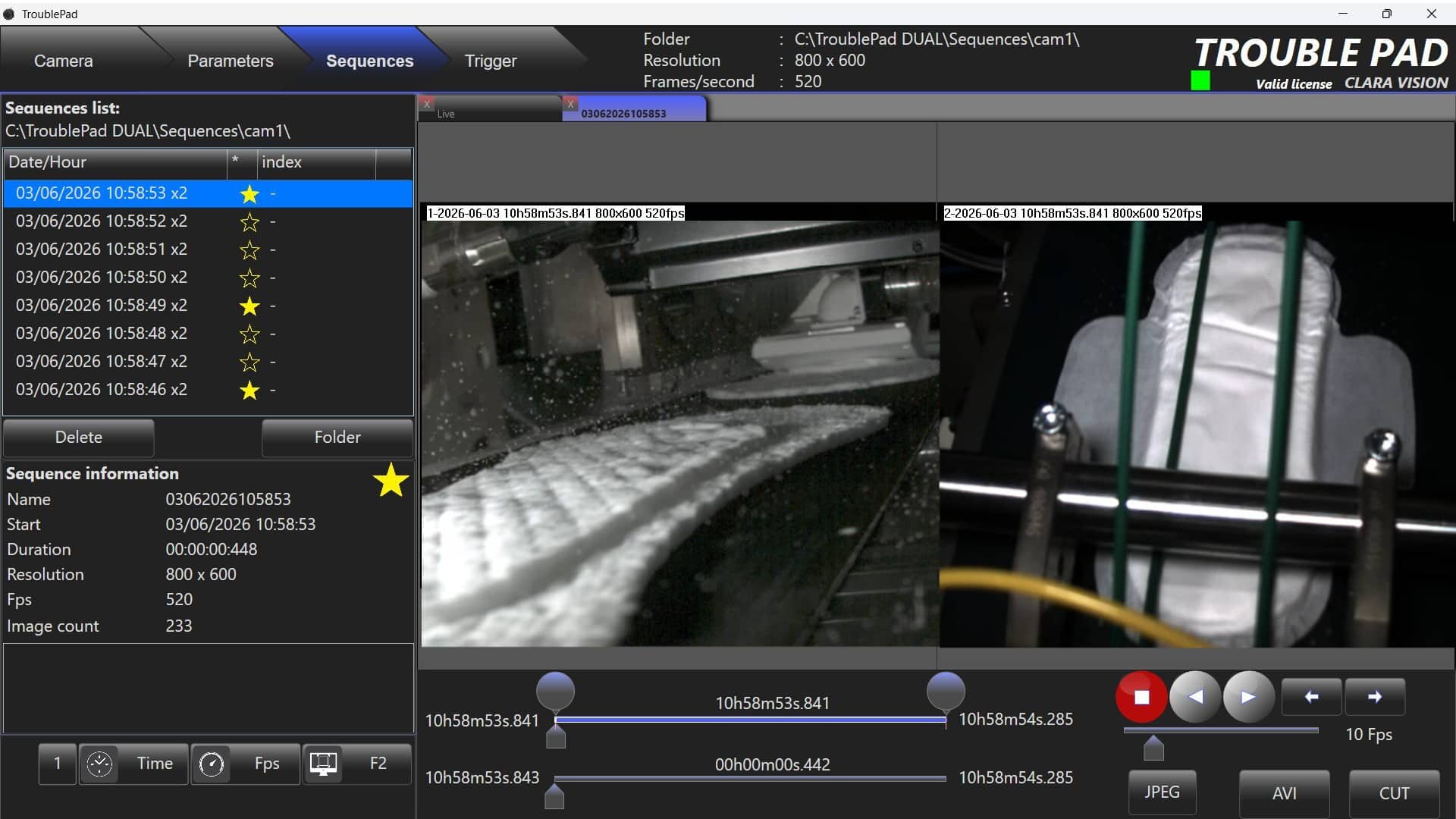
TroublePad Dual's key asset is the simultaneous, synchronised slow-motion playback of both video streams. On the rugged tablet's touchscreen, you view the footage from both cameras side by side, synchronised frame by frame. This feature opens up entirely new fields of investigation: understanding the cause-and-effect relationship between two areas of your process, detecting mechanical misalignment between two stations, or checking the synchronisation between two high-speed machines. Like the whole TroublePad range, the software includes continuous loop recording and external triggering via the (optional) Trigger box, which slaves both cameras to the signals from your own sensors and machines: you only keep the critical moments and catch random defects without constant supervision.- Synchronised frame-by-frame playback of both video streams
- Continuous loop recording: only keep what matters
- Pre/post event triggering on external signal (optional Trigger box)
- Long recording time: 2h, 4h, 8h or more (external SSD option)
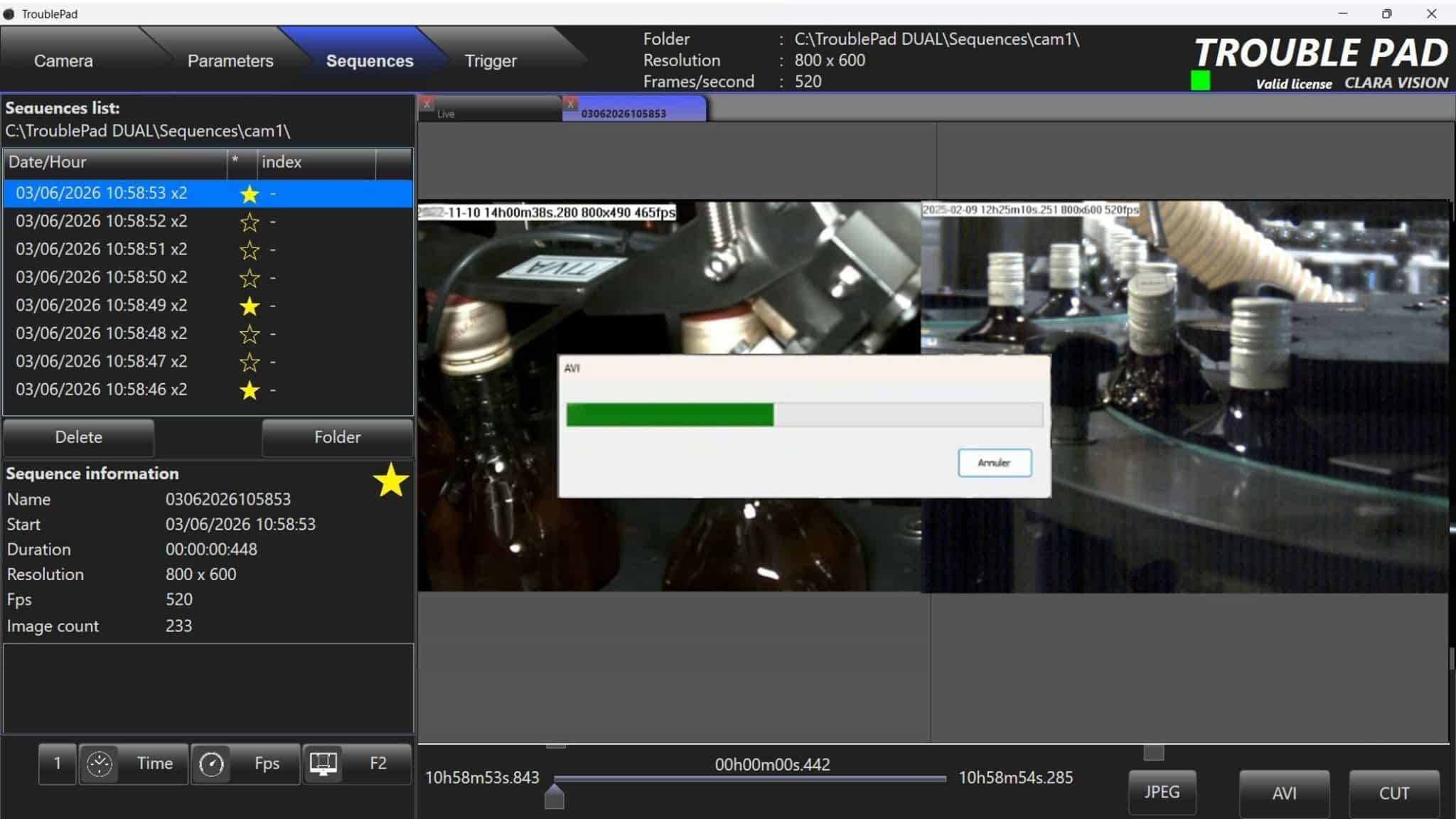
- Video export in AVI format and JPEG image extraction
- Video sharing via network or cloud
TroublePad Dual performance and recording capacity
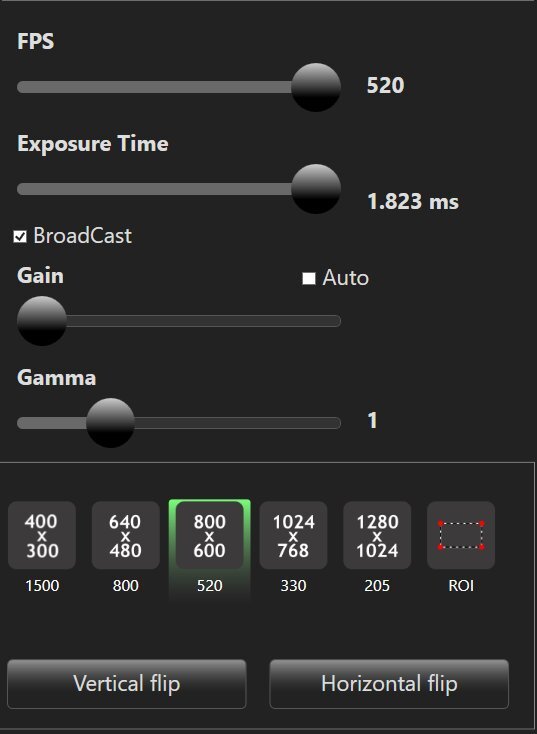
TroublePad Dual offers the same high acquisition speeds as the TroublePad Classic, on both cameras simultaneously. The recommended speed for most industrial applications is 520 frames per second at 800×600 pixel resolution.| Resolution | Acquisition speed | Recording time* |
|---|---|---|
| 1280 × 1024 px | 205 frames/s | ≈ 33 minutes |
| 1024 × 768 px | 330 frames/s | ≈ 33 minutes |
| 800 × 600 px | 520 frames/s (recommended) | ≈ 35 minutes |
| 640 × 480 px | 800 frames/s | ≈ 36 minutes |
| 400 × 300 px | 1 500 frames/s | ≈ 40 minutes |
| 320 × 240 px | 2 500 frames/s | ≈ 40 minutes |
Technical specifications
| CompoNents | Characteristics |
|---|---|
| Camera | 2× HD 1280×1024 digital colour camera — USB 3.0 interface |
| Sensor | Colour (high-sensitivity CMOS) |
| Lenses | 2× manual zoom 8–48 mm F1.0 + macro close-up lenses 1D, 2D, 4D, 10D |
| Lighting | 2× LED panel with 176 LEDs (~1300 lux at 50 cm) — mains or batteries (optional) |
| Mount | 2× magic arm with variable friction (camera + lighting) |
| Tablet | Rugged 14'' IP65 MIL-STD-810H — i7, 32 GB RAM, 1 TB SSD (2/4/8 TB option) |
| Connections | 2× USB 3.0 cables / 3 metres |
| Protection | IP65 tablet — Waterproof version available (IP67 camera, IP68 lighting) |
| Carrying case | Carrying case with pre-formed foam — 575×470×205 mm |
| Software | TroublePad, shared across the whole range |
| Reference | STA043 |
TroublePad Dual is also available in a Waterproof version
For environments exposed to humidity, water splashes or dust, TroublePad Dual is available in an IP67/IP68 Waterproof version (camera and lighting) with an IP65 rugged tablet. This version guarantees quality slow-motion footage in the most demanding production conditions, without compromising equipment durability. Discover the TroublePad Waterproof & Motorised WaterproofTroublePad Dual fields of application
TroublePad Dual is particularly suitable when multi-angle analysis is essential to understanding a malfunction. Its main industrial applications are:- High-speed production lines: food processing, beverages, packaging, cosmetics
- Filling machines: simultaneous analysis of filling and capping
- Packaging lines: simultaneous checking of station infeed and outfeed
- Fast-cycle systems: press, cutting, labelling, laser marking
- Preventive maintenance: correlating mechanical defects in two separate areas
- Line validation: checking correct sequencing between two machines

Loop recording
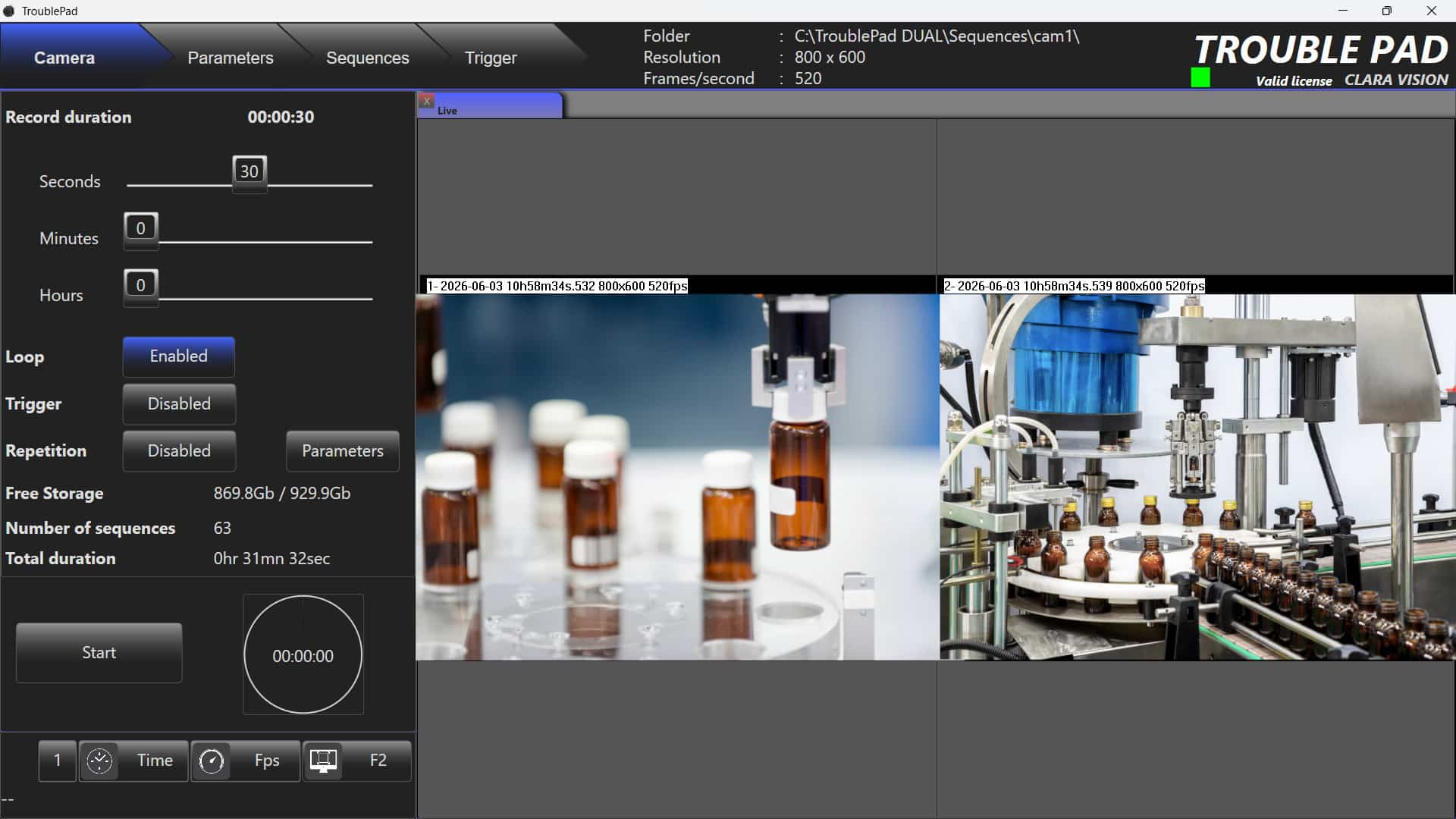
- TroublePad Dual's high-speed camera control software is easier to use than any other.
- It is the operational heart of the high-speed video workstation.
Setting recording speed
Playback and slow motion of high-speed videos
Sequence editing / Creating an AVI
Controlling the system through external triggers
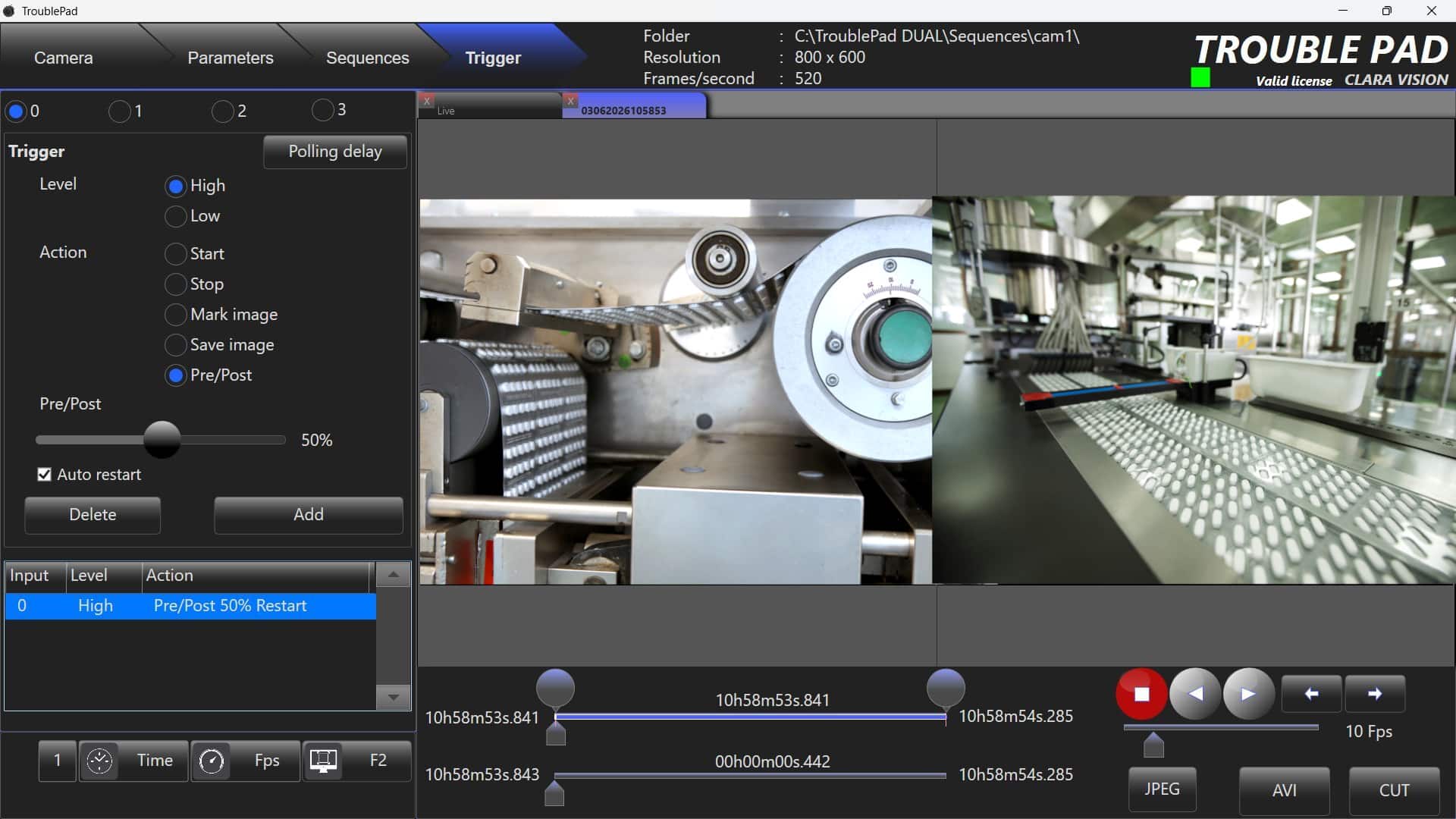
- Start recording
- Stop recording
- Mark key frames
- Store a few seconds before and after the signal from your sensors... (pre/post triggering)
- Presentation of the TroublePad High-Speed Camera System
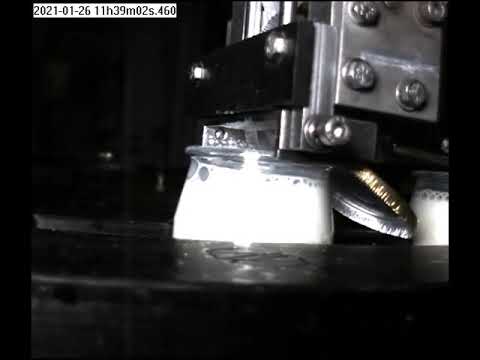
- Our high-speed camera filming the application of lids on yoghurt pots
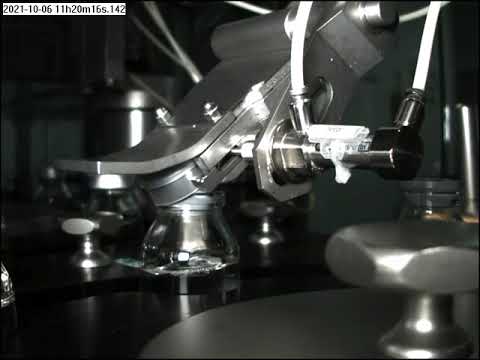
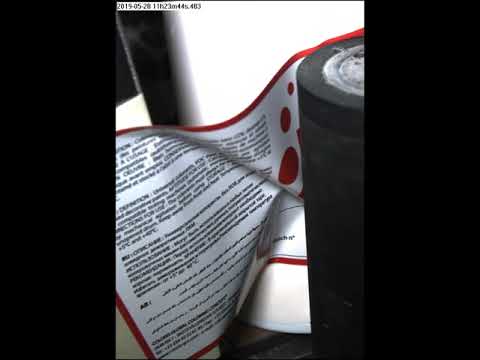
- Viewing a label press setup with a Trouble PAD high-speed camera
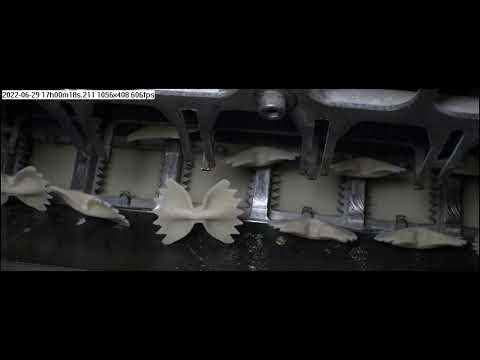
- Pasta production with the Trouble Pad







Application note Sheet cutting line
Industry | Application | Product |
|---|---|---|
Papermaking | Sheet cutting line | TroublePad |
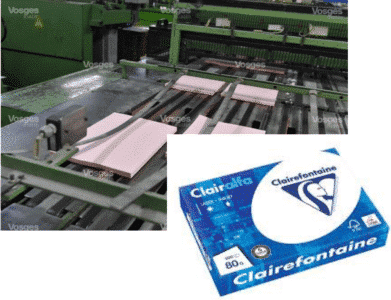
First, a special machine lays out and cuts large sheets that are stacked in batches of 500. The reams of paper are then wrapped. These layout and finishing operations require the machinery to be perfectly adjusted and all components to be in good condition. The Trouble Pad camera displays the stacking and cutting sequences. Maintenance technicians can access slow-motion images of the machinery in operation. They can accurately identify the fault and act quickly to adjust settings or replace components as required. The slow-motion feature is a real boon when searching for phenomena that are impossible to see with the naked eye ! Conclusion : Thanks to the Trouble Pad system, the Clairefontaine papermaking factories and the Hamelin group have access to information that would be impossible to detect with the naked eye. Slow-motion images simplify machinery tuning and maintenance operations. The Clairefontaine paper mills and the Hamelin group have been using Trouble Pad at their production sites since 2018. | ||

Application note Vaccine/drug manufacturing line
Industry | Application | Product |
|---|---|---|
Pharmaceutical industry | Vaccine/drug manufacturing line | TroublePad |
Conclusion : | ||

Application note Packaging line
Industry | Application | Product |
|---|---|---|
Special machinery | Packaging line | TroublePad |
Many adjustments are required in order to ensure the packaging machines function correctly during assembly/manufacture. Operators are faced with high-speed sequences that cannot be broken down by the naked eye. The Trouble Pad camera makes it possible to break those sequences down. Technicians can then identify precisely the improvements that need to be made thanks to the slow-motion images. The machines are quickly adjusted, and promptly shipped and installed on site. In addition, field technicians can take the camera kit on site to save time on certain delicate adjustments. The slow-motion footage saves valuable time on their callouts. Conclusion : Thanks to the Trouble Pad high-speed camera, setup and adjustment times are improved. | ||

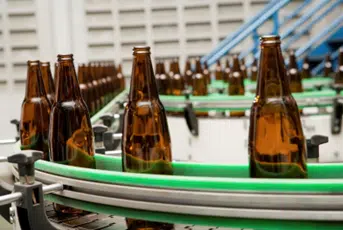
Application note Component manufacturing
Industry | Application | Product |
|---|---|---|
Electricity | Component manufacturing | TroublePad |
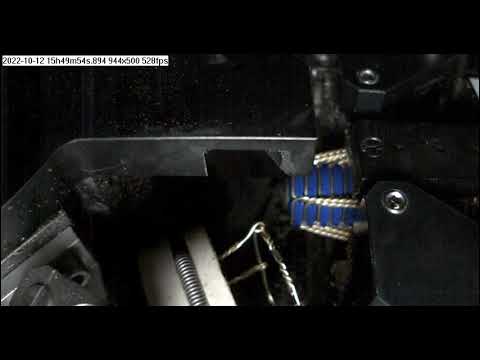
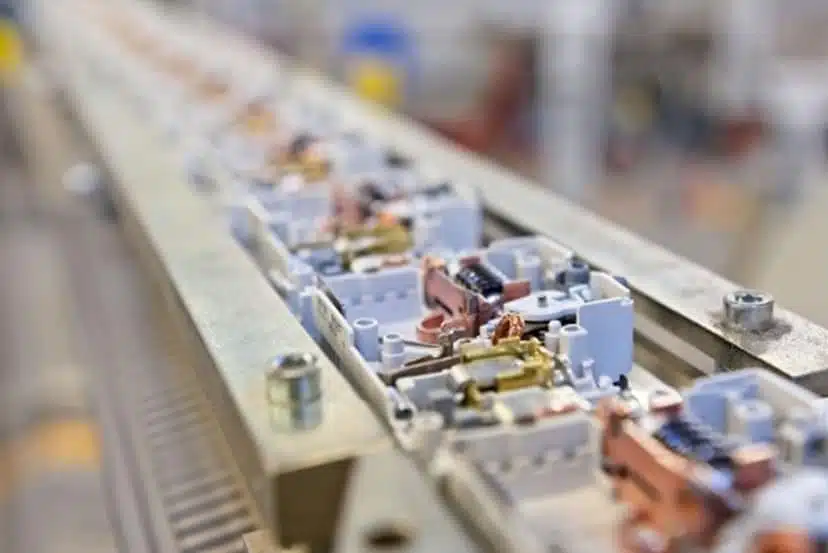
To guarantee production quality, technicians must ensure that the line is not disrupted by sudden movements. These movements sometimes occur at random. In addition, there are many different items, requiring fine machinery adjustments for each new production run.. The high-speed Trouble Pad camera detects the disruptive movements, which are invisible to the naked eye. Maintenance technicians can view slow-motion images of the mechanical parts as they move. They can precisely identify the defect and act on the appropriate parts of the machine. The slow-motion images are easily accessible, as the installation of the Trouble Pad high-speed camera only takes a few minutes ! Conclusion : Thanks to the Trouble Pad high-speed camera, motion detection enables technicians to quickly correct defects, with minimal shutdown times. | ||

Application note Bottling
Industry | Application | Product |
|---|---|---|
Agri-food | Bottling | TroublePad |
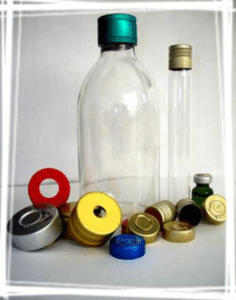
The machines must be perfectly tuned to maintain production rates (50-70,000 bottles /hour). There are many parameters involved: new capsule design, empty bottle weight, size variations. Random desynchronisation events can occur in the machine cycle and shut down production. The high-speed Trouble Pad camera detects these slippages, which are invisible to the naked eye. Maintenance technicians can view slow-motion images of the mechanical parts as they move. They can identify the specific defect thanks to the high-speed Trouble Pad camera. In addition, there may also be a security issue for personnel given the speed of these machines. The machine can then be recalibrated, quickly and safely. The High-speed Trouble Pad camera is a precious asset and the slow-motion images are accessible in just a few minutes ! Conclusion : Trouble Pad reduces production shutdown times and improves line productivity. | ||

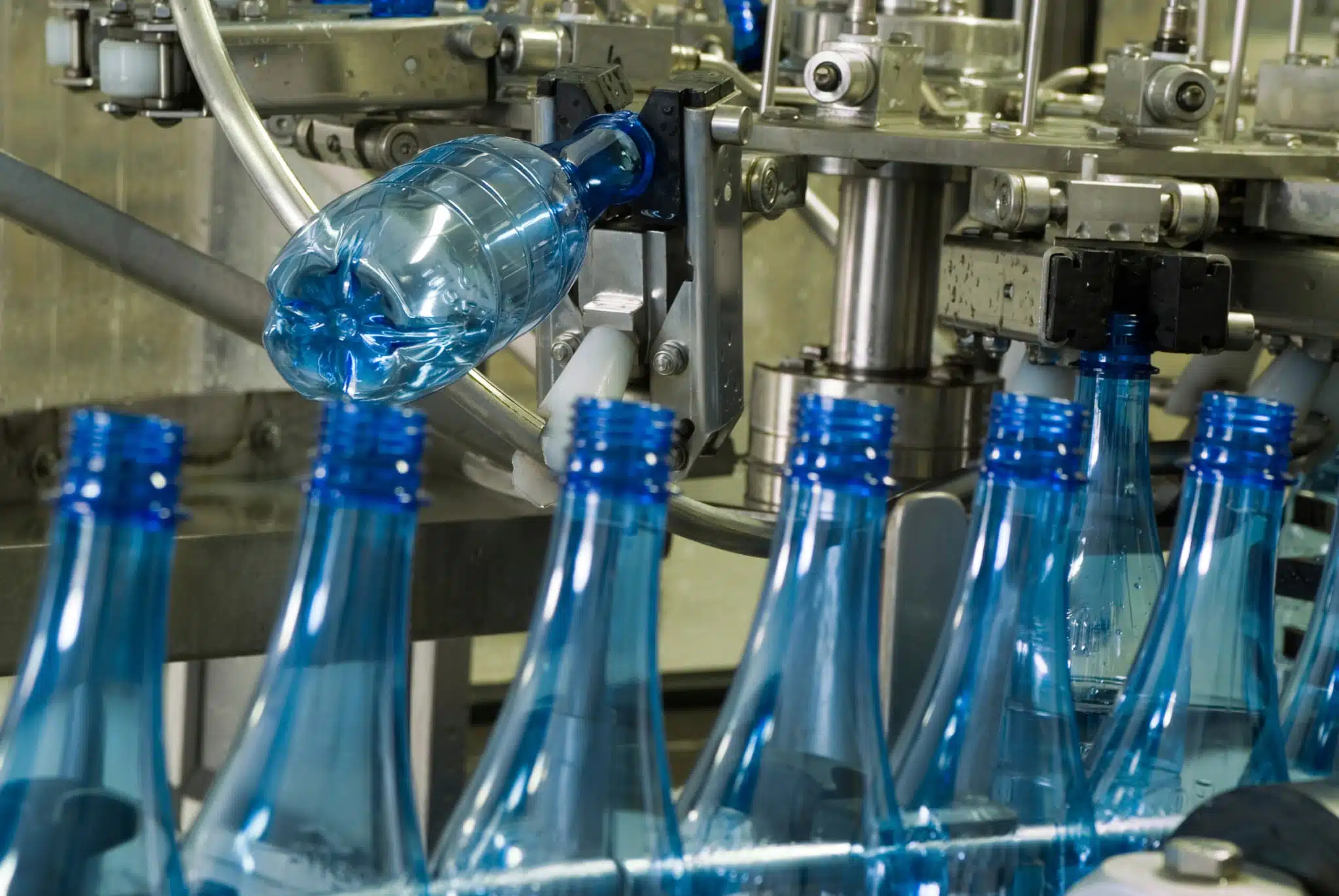
Application note Bottling
Industry | Application | Product |
|---|---|---|
Agri-food | Bottling | TroublePad |
The machines must be perfectly tuned to maintain production rates. There are many parameters: the type and thickness of the capsule, surface condition and size variations. Random desynchronisation can occur in the machine cycle and shut down production. The high-speed Trouble Pad camera detects these slippages, which are invisible to the naked eye. Maintenance technicians can access slow motion images of the mechanical parts as they move. They can identify the specific defect thanks to the slow motion. The machine can then be recalibrated quickly. Conclusion : Production downtime has been reduced thanks to Trouble Pad and the slow-motion images, | ||

Application note Paper production line
Industry | Application | Product |
|---|---|---|
Hygiene | Paper production line | TroublePad |
During the production process a machine is used to cut precise lengths of sheets of absorbent paper. Technicians must ensure that rotating cylinders are perfectly adjusted so as not to break the flow of these cut sheets. With the tablet that is connected to the Trouble Pad high-speed camera, the operator can see the sheet as it is passes over a spinning roller. The ultra-fast rotation of successive rollers can cause the sheet to fold over on itself. This crease usually causes quality defects on the finished product. Similarly, when making absorbent or tissue papers, the machines operate at very high speed and require incredibly precise settings. The machinery’s movements are invisible to the naked eye. Maintenance technicians can see the mechanical parts moving in slow-motion using the Trouble Pad’s high-speed video footage. They can install the TroublePad camera in parts of the machinery that humans cannot access, to identify the defect that they would otherwise be unable to see. Setting up the camera only takes a few minutes! The source of the disruptions can then be identified, and quality improved. Conclusion : Motion detection enables technicians to view the position of the roll of paper. As a result, defect (creasing) detection occurs earlier in the process and avoids quality defects on the finished product. ONTEX has been using Trouble Pad since 2018 at its production sites in France and Spain. Essity Gien, Kunheim and Mannheim use it … as does Kimberly-Clark in Rouen. | ||


Christopher MALLERON-FONTAINE - Maintenance Manager - Isigny Ste Mère - France
We used to use Go-Pro type cameras as part of our maintenance tasks on packaging machines.
After realising the technical limitations of this type of camera, we turned to a professional model, the TroublePad camera by Claravision.
This equipment is very effective in its role, and we have been able to achieve unprecedented results.
On certain machines, which move at very high speed, we have been able to detect defects that the naked eye could not pick up. Using the software to slow down the footage, we were able to remove these defects very quickly.
Plus, thanks to its trigger command and loop mode, we were able to set the TroublePad camera on long surveillance (3 days, 24hr/24) and automatically only retain the footage with the fault we were looking for.
The software is easy to use and intuitive: our technicians can use it after only an hour’s training session.Claravision’s technical department is very responsive if we need advice or help with using it.
The Troublepad camera has become a tool in its own right in our maintenance department, helping with diagnostics, and we encourage our technicians to use it as much as possible.

Jay - HP Inc. - USA
The TroublePad has been very good troubleshooting upgrade for HP inkjet cartridge manufacturing.
Our older cameras were large and so were the lights – it could be difficult to get good angles on moving parts that were inside of machines or behind guards.
With the TroublePad, we can easily mount the camera and lights inside the tool. The software has been very good – the ability to keep the camera running on a loop using various triggering options gives us a lot of flexibility.
Maybe the best thing of all is how self-contained it is. With older high-speed camera setups, engineers would have software installed on their personal laptops and you’d have to deal with drivers, Windows configurations, etc.
With the TroublePad, anyone can just grab the camera case and everything they need is inside it.